
A Formula 1 feature by Matt Youson, published on formula1.com on 2 May 2019, looks at how the 1994 San Marino Grand Prix shaped the sport's approach to safety. That weekend at Imola, Roland Ratzenberger and Ayrton Senna were killed in separate incidents, Rubens Barrichello was left unconscious after hitting a catch-fence, and debris from a start-line collision injured several spectators in a grandstand. Two weeks later in Monaco, Karl Wendlinger suffered a serious injury.
The article does not present Imola as the sole trigger for change, stating that "the sport was changing before the events of that awful weekend." Instead, it says the weekend "focussed minds and increased urgency." Pat Symonds, Benetton's head of R&D in 1994 and F1 chief technical officer when the piece was written, said: "The immediate work was not to improve the specific safety of the cars, but rather to slow the cars down." At the Spanish Grand Prix, race five of 1994, the diffuser was shortened and front wing endplates were changed. At the Canadian Grand Prix, holes were opened in the airbox to reduce engine power, and the plank was fitted from the German Grand Prix. Later measures included rear impact tests, side impact structures with anti-penetration panels, wheel tethers, low noses and the Halo.
Circuits changed too. According to the article, a resurrected Grand Prix Drivers' Association insisted on a temporary chicane at the Circuit de Catalunya before the 1994 Spanish Grand Prix, removing the danger from Nissan corner, while Montreal added a chicane on its back straight. Silverstone was slowed and tightened with more run-off, Spa gained a slower Eau Rouge chicane, and Monza tightened the second Lesmo for 1994 before later moving Curva Grande inwards. At Imola, Tamburello and Villeneuve, where the two fatal crashes happened, became chicanes with extensive gravel traps. Newer venues were built with large tarmac run-offs "under the watchful eye of the late Charlie Whiting." On spectators, Symonds said: "A spectator in the grandstands, shouldn't have to evaluate any risk."
Driver equipment also advanced. Ratzenberger's death followed a high-energy impact in qualifying and was attributed to a basilar skull fracture. The HANS (Head And Neck Support) device dates back to the 1980s and was developed by multiple IMSA champion Jim Downing and his brother-in-law, the late Professor Robert Hubbard. Hubert Gramling, a Mercedes research engineer and later FIA Institute head of research, tested it extensively between 1996 and 1998. HANS received FIA approval in 2001, first appeared in F1 in 2002 and became mandatory for the 2003 season, and in 2007 a HANS-type device was made compulsory in all FIA-sanctioned series. Downing recalled: "Yeah, people used to point and smile and wonder what I was wearing."
Other gear has followed. Fireproof overalls resist temperatures of +800°C, and a Zylon strip across the top of the visor was added in 2011 after Felipe Massa's 2009 accident at the Hungaroring. The 2019 helmet standard lowered the visor opening by 10mm and introduced new composite materials for the shell, while drivers now wear biometric gloves measuring pulse and blood oxygen, along with an in-ear accelerometer.
The Halo marked a further step in cockpit protection. The FIA said the F1 Strategy Group agreed unanimously in July 2016 to introduce additional frontal protection, the same month the GPDA asked FIA President Jean Todt for such protection to be "implemented as swiftly as possible." The Aeroscreen was tested in practice at the 2016 Russian Grand Prix, and the Shield had a short track test on Sebastian Vettel's Ferrari at the 2017 British Grand Prix, with feedback pointing to "a number of limitations." In car-to-car tests, the Halo withstood "15x the static load of the full mass of the car." On 19 July 2017 the FIA confirmed the Halo for 2018, saying it "presents the best overall safety performance."
Symonds was confident in the device: "If the Halo hasn't saved anyone from injury yet – and arguably maybe it has with Charles Leclerc and Fernando Alonso – it will do, no doubt about it. It's a good bit of kit." He added: "This sport really has saved a lot of drivers from injury across many categories of racing." The formula1.com feature also names Max Mosley and Jean Todt among the key figures behind the sport's safety progress.
Sources
On Instagram
View this post by @charles_leclerc on Instagram
Post by @charles_leclerc (Charles Leclerc) · official site, shown with Instagram's official embed.
View this post by @f1 on Instagram
Post by @f1 (Formula 1) · official site, shown with Instagram's official embed.
In this story

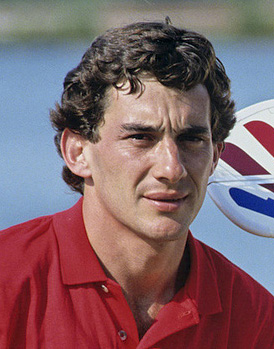
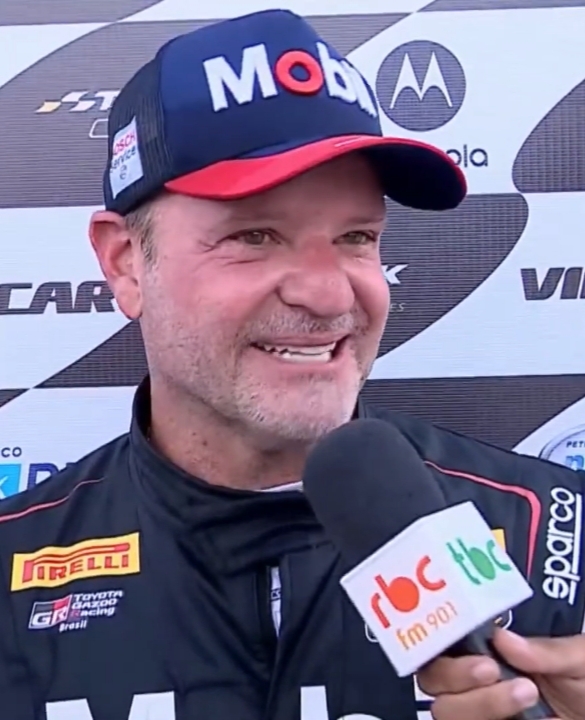


Official sites and profiles from Wikidata; photos from Wikimedia Commons, with author and licence.
Today's Grand Prix newsroom · Written from the official sources listed above and reviewed by an editor before publication. Published .