
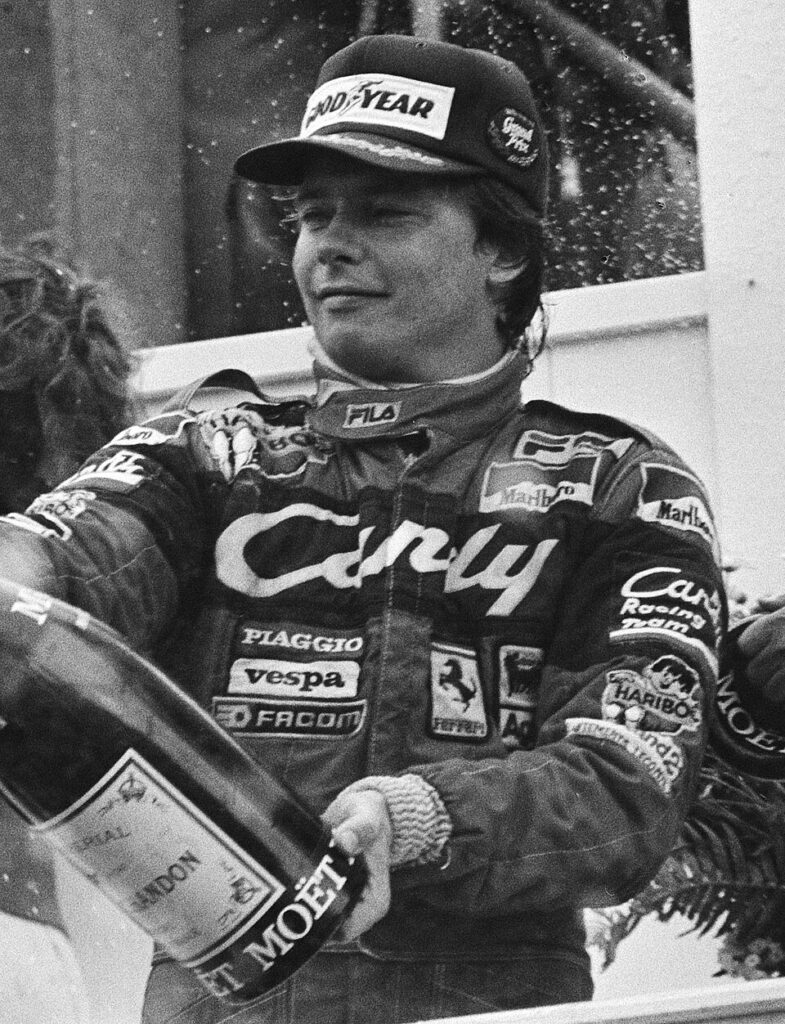
Gilles Villeneuve died on 8 May 1982, aged 32, after a crash in qualifying for the Belgian Grand Prix at Zolder. In an article by senior editor Greg Stuart, published on what would have been his 71st birthday, Formula 1 looked back at the accident and at why the French-Canadian driver still holds such a strong place in the sport's memory.
According to formula1.com, Villeneuve had gone out for his final qualifying run when he came across the slow-moving March of Jochen Mass. Mass moved to the right to get out of the way just as Villeneuve committed to the same line. The impact launched Villeneuve from his car into the catch fencing. He was taken to hospital in Leuven but could not survive a fracture to his neck.
The article points to two factors behind the accident. Teams had only a limited number of one-lap qualifying tyres, which turned qualifying sessions into what it called "banzai affairs". Villeneuve was also feuding with his Ferrari teammate Didier Pironi, who had ignored team orders to win the previous race, the San Marino Grand Prix at Imola. After that race Villeneuve told journalist Nigel Roebuck: "I have declared war… I'll do my own thing in future. It's war, absolutely war." Just a few months after Zolder, Pironi suffered a career-ending crash at Hockenheim.
Villeneuve raced in six seasons of Formula 1, scoring 6 wins and 2 pole positions from 67 Grand Prix starts. He made his debut at the 1977 British Grand Prix with McLaren, carrying the number 40, and also raced with numbers 21, 12 and 2. Although he is closely linked with the number 27, he drove it for only 19 Grands Prix, and four of his six wins came with number 12. Before Formula 1 he learned to race on snowmobiles in Quebec and became snowmobile world champion in 1974.
Formula 1 listed his car control among the main reasons he is remembered. Jackie Stewart said: "His car control was extraordinary, even compared with the many talented drivers I've had the opportunity to drive against over the years… [He drove a] Grand Prix car to the absolute limit of its ability." The article also recalls his battle with Renault's Rene Arnoux for second place at the 1979 French Grand Prix at Dijon, a lap on three wheels at Zandvoort, and third place at the 1981 Canadian Grand Prix after a lap with a folded front wing. Mass said of him: "Sometimes, like at Zandvoort, he was stupid and ridiculous. But the fans loved the way he raced, and that's just the way he was. Motor racing needs drivers like this."
He was also one of Enzo Ferrari's favourites. After Villeneuve crashed at the Woodcote chicane on lap 4 of the 1981 British Grand Prix in the Ferrari 126CK, an accident that also eliminated Alan Jones of Williams and Andrea de Cesaris of Alfa Romeo, Ferrari told Harvey Postlethwaite: "Too narrow, this chicane." Following his death, Ferrari said: "His death has deprived us of a great champion – one that I loved very much. My past is scarred with grief; parents, brother, son. My life is full of sad memories. I look back and see the faces of my loved ones, and among them I see him."
The article concludes that his death ensured his "mythic status". Journalist Denis Jenkinson wrote in tribute: "With the death of Gilles Villeneuve, Grand Prix racing will not be the same. It will still go on and one day another star will appear and shine brightly, but until that day something has gone out of racing that will be hard to replace."
Sources
On Instagram
View this post by @scuderiaferrari on Instagram
Post by @scuderiaferrari (Ferrari) · official site, shown with Instagram's official embed.
View this post by @f1 on Instagram
Post by @f1 (Formula 1) · official site, shown with Instagram's official embed.
In this story



Official sites and profiles from Wikidata; photos from Wikimedia Commons, with author and licence.
Today's Grand Prix newsroom · Written from the official sources listed above and reviewed by an editor before publication. Published .